Your Brand Isn’t Confusing — It’s Overcrowded

Kim Anthony • December 31, 2025

How simplifying your message can double clarity, engagement, and sales


Most brands don’t struggle because they lack greatness. They struggle because they’re crowded. Over time, businesses accumulate messages the way closets accumulate clothes. A tagline gets added. A new offer appears. A side project becomes part of the main pitch. Before long, what once felt clean and focused becomes layered, busy, and hard to process. When customers say, “I’m not quite sure what you do,” it can sting — but it’s also an invitation. Not to add more. To clear space.


Clarity rarely comes from expansion. Clarity almost always comes from subtraction.


When brands first start, the message usually feels sharp and direct. But growth brings opportunities — and with opportunities comes complexity. You begin serving more types of clients. You test different services. You create multiple programs. Each one feels important, so instead of choosing, you start stacking. Eventually you find yourself saying too much, too fast, to too many people. The irony is that the more you try to explain, the harder it becomes for anyone to understand.


If People Can’t Repeat It, They Can’t Remember It


A powerful brand can usually be repeated in one simple sentence. Not a paragraph. Not a presentation. A sentence:

  • “I help small businesses organize their finances.”
  • “We teach busy professionals how to get healthy.”
  • “We create spaces where leaders can grow.”

When someone hears that kind of clarity, they immediately know where you belong in their brain. But when your explanation sounds like, “Well, I do consulting, coaching, speaking, facilitation, retreats, courses,

workshops, and I also have a podcast,” people start mentally backing away. Not because you aren’t capable — but because the human brain needs anchors, not avalanches.

The more simply you describe what you do, the more room your audience has to imagine themselves working with you. Complexity feels impressive to us. Simplicity feels reassuring to them.

Too Many Offers Create Decision Fatigue


Another reason brands feel crowded is the desire to give people options. On paper, options seem generous. In reality, too many options paralyze people. When someone visits a website and sees multiple buttons, multiple packages, multiple directions, and multiple types of clients served, they begin to wonder whether any of it is actually meant for them. Instead of feeling invited, they feel uncertain — and uncertainty rarely buys.

Decision fatigue is real. When choosing feels like work, people delay. And when they delay, they often disappear. Fewer, clearer pathways create momentum. They move people through an experience instead of dropping them into a maze. Simplifying isn’t losing money. It’s guiding attention where it matters most.

Your Audience Doesn’t Need Everything — They Need the Right Thing


Many overcrowded brands are built from a good heart. You want to help. You have experience. You’ve learned so much, and you want to share all of it. But when you try to solve every problem, your brand stops standing for anything specific. People don’t hire “general capability.” They hire meaningful outcomes. They want to feel less overwhelmed, more confident, more organized, more profitable, more fulfilled — whatever transformation you specialize in.

When you boldly name that transformation, you give your brand a spine. Everything else becomes supporting material rather than the main message. You don’t have to stop offering multiple services. You simply have to choose which one becomes the doorway people enter through. Once they trust you, they’ll discover the rest.

Simplification Builds Trust


An overcrowded message can accidentally sound like you’re trying to prove yourself. The tone shifts from grounded to grasping. On the other hand, simplified branding communicates assurance. It tells people, “We know exactly who we are and where we create the greatest impact.” Clarity feels like leadership. Leadership creates safety. And safety is what allows people to invest.

This is why simplifying often results in more sales, not fewer. When people sense certainty, they relax. They stop questioning whether they’re making the right choice. Simplicity doesn’t dull your brilliance — it reveals it.

The Three-Question Reset


Whenever your message starts feeling heavy or scattered, returning to a few core questions can quietly recalibrate things. Ask yourself what you truly want to be known for if you could only choose one thing. Ask which offer consistently creates the best results, not merely the highest volume of activity. And finally, ask what single sentence you’d like someone to repeat about your work after they leave a conversation with you. Those answers usually tell the truth faster than any branding exercise.

Everything that doesn’t align with those answers may still have value — but it no longer leads the brand. It becomes supportive instead of central. This is where freedom appears. Simplifying is not erasing parts of yourself. It’s arranging the pieces so people can actually see you.

Simplifying Is Not Dumbing Down


There’s often a quiet fear that simplifying will make our work sound shallow. But the opposite is true. Simple messages make room for depth. They give you space to tell stories, share insights, and invite people deeper once they’re inside your world. Complicated branding exhausts people before they ever get close enough to appreciate what you do.

The most sophisticated brands in the world use remarkably simple language. Not because they lack depth — but because they know clarity is a form of respect.

The Bottom Line


Your brand likely isn’t confusing. It’s simply overcrowded. Over time, ideas piled up, directions multiplied, and suddenly the message became harder to hear. The good news is that clarity is always recoverable. It returns the moment you choose what matters most and let everything else take a respectful step back.

When you simplify, people find you faster. They understand you quicker. They trust you more deeply. And when trust rises, engagement and sales naturally follow. Growth, in many cases, isn’t about building more layers. It’s about finally saying: “This is who we are. This is what we do best. This is who it’s for.” And letting the confidence of that simplicity carry your work forward.
By UBJ Staff August 19, 2026
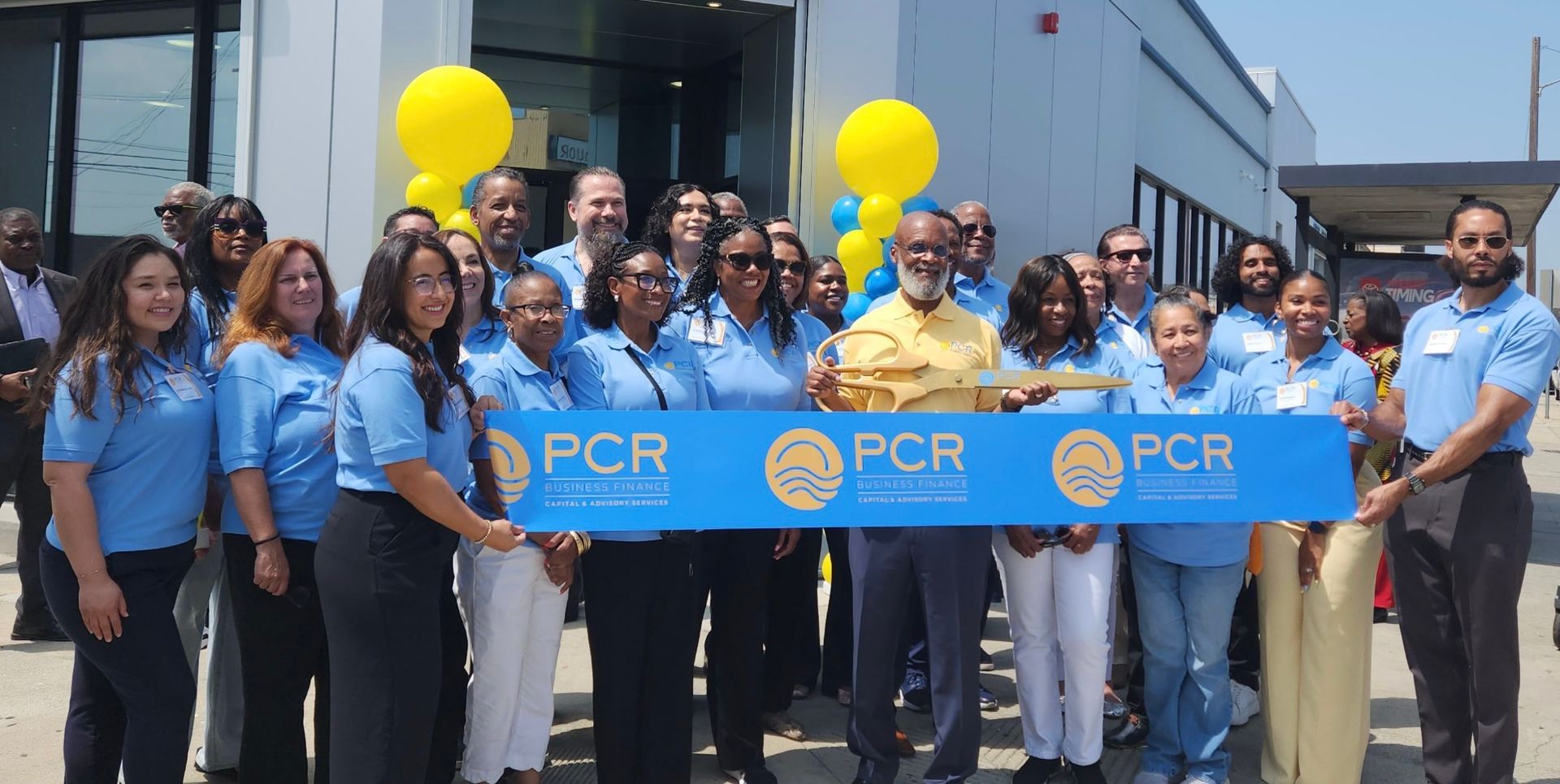
PCR Business Finance has officially opened the doors to its new headquarters at 3800 W. Slauson Avenue in Los Angeles , placing a major small-business resource directly in the community it was created to serve. Elected officials, community organizations, business owners and supporters gathered for a ribbon-cutting ceremony and open house celebrating the new location—and what it could mean for entrepreneurs throughout South Los Angeles. For PCR President and CEO Mark Robertson Sr. , reaching this milestone required faith, determination and a clear commitment to the community. “The process has been one of faith, persistence, pushing forward to make sure this happens for our community at this time,” Robertson said. “PCR was started almost 50 years ago to support businesses that don’t have resources, and now, here we are, putting our footprint in the community that needs us most,” he continued. “We are just so excited about that.” Nearly 50 Years of Expanding Economic Opportunity Founded in 1977, PCR Business Finance is a nonprofit 501(c)(3) organization that promotes community economic development through financial, educational and advisory services. PCR is described as the only organization in Los Angeles County with dual designation as both a Community Development Financial Institution and Small Business Development Center. Through those roles, the organization connects under-resourced entrepreneurs with financing, technical assistance, education and guidance designed to help them start, stabilize and grow their businesses. Its new Slauson Avenue headquarters represents a significant investment in that mission—and in the future of South Los Angeles business owners. “We’re not just celebrating today a new building, but what this building represents for South L.A. entrepreneurs,” said Los Angeles County Supervisor Holly Mitchell , who delivered the keynote address. “We deserve a world-class resource right here in our own community.” Mitchell described the new headquarters as a $6 million investment in the unincorporated Second District and emphasized the importance of strengthening community-based financial institutions. “We are here at a pivotal time,” Mitchell said. “Community development financial institutions are under attack from our very own federal government.” “This $6 million investment—I said, $6 million investment—in unincorporated Second District really is a declaration that we believe in ourselves, this community, and we’re not going to wait on the federal government to validate our worth.” A Visible Home for Business-Building Resources Los Angeles City Council President Marqueece Harris-Dawson celebrated PCR’s decision to make its presence visible along the Slauson Avenue corridor. “A big round of applause for beautifying an already beautiful corridor—our corridor—and putting your name on front street so everybody can see that we’re up in here, about the business of our community having small businesses,” Harris-Dawson said. “It’s important that you’re here. It’s important that everybody knows, if I ever get ready to have a business, I know where to go. It’s right here on the corner.” Other officials and representatives attending the celebration included: Long Beach City Councilwoman Tunua Thrash-Ntuk Representatives from the office of Compton Mayor Emma Sharif Representatives from the office of U.S. Rep. Sydney Kamlager-Dove Representatives from the office of California State Sen. Lola Smallwood-Cuevas Representatives from the office of California State Treasurer Fiona Ma Representatives from the office of Assemblymember Isaac Bryan Representatives from the office of Assemblymember Tina McKinnor Representatives from the office of Los Angeles County Assessor Jeffrey Prang Representatives from the office of Los Angeles Metro Board Director Jacquelyn Dupont-Walker Helping Businesses Prepare for Major Opportunities PCR enters its next chapter with a long record of connecting businesses and communities to capital. The organization recently surpassed $50 million in administered funds through Los Angeles Metro’s Business Interruption Fund , one of many milestones it has achieved during nearly five decades of service. PCR is also helping small businesses prepare for the economic activity expected around the 2028 Olympic and Paralympic Games in Los Angeles and other large-scale events coming to the region. Those opportunities could generate new customers, contracts and visibility for local companies. But small-business owners may need financing, certifications, stronger operations and technical guidance to compete effectively. PCR’s combination of capital and business-development services positions the organization to help entrepreneurs become ready for those opportunities. Bringing the Work Back Home The opening also carried deep personal meaning for Robertson, who grew up in the surrounding neighborhood. “It feels wonderful,” Robertson said after cutting the ribbon. “This is the community I grew up in. I went to 54th Street School, maybe just a half mile from here.” “This is my neighborhood, and it’s good to be able to go out, have been educated, trained and bring all of that back to the community I love.” With its new headquarters now open, PCR Business Finance is creating a visible place where entrepreneurs can seek funding, receive guidance and find the support needed to move their businesses forward. For more information about PCR’s financing, education and business-advisory services, visit pcrcorp.org . UBJ Takeaway: South Los Angeles and Southern California entrepreneurs seeking capital or business assistance should review PCR’s available loan programs, advising services and upcoming training opportunities—particularly those preparing for public contracting and LA28-related growth.
By UBJ Staff August 19, 2026
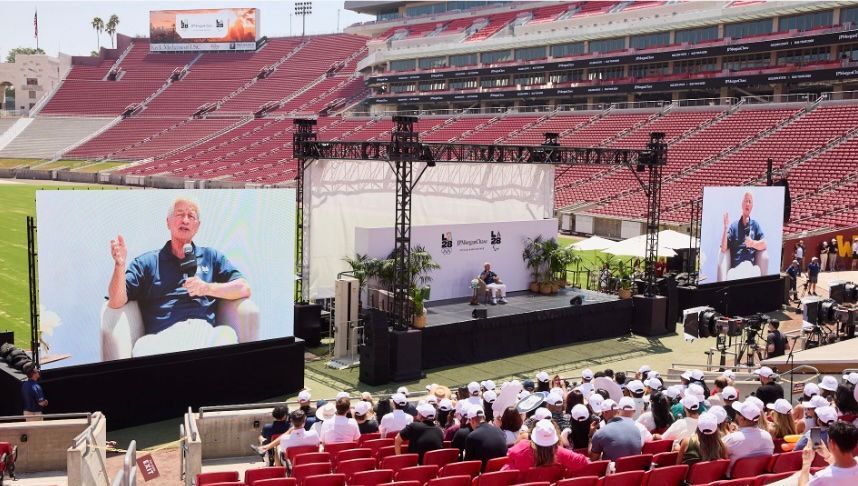
As Los Angeles prepares to welcome the world, local entrepreneurs are being encouraged to prepare now for the contracts, capital and growth opportunities surrounding the 2028 Olympic and Paralympic Games. By Urban Business Journal Staff The 2028 Olympic and Paralympic Games will bring more than world-class competition to Los Angeles. They are also expected to generate significant demand for local goods, services and suppliers—and JPMorganChase says small businesses should be positioned to participate. JPMorganChase Chairman and CEO Jamie Dimon and Los Angeles-based executive Diedra Porché are helping focus attention on the economic potential surrounding LA28, particularly for entrepreneurs and neighborhood businesses that have historically struggled to access major contracts and growth capital. The financial institution recently became the Official Bank of Team USA and the LA28 Olympic and Paralympic Games, a Founding Partner of LA28 and the first Global Banking Partner in Olympic history. But for Los Angeles business owners, the most consequential part of the partnership may be what happens beyond the competition venues. JPMorganChase says its LA28 commitment will include efforts to empower local businesses, increase access to financial resources and help ensure that the economic impact of the Games continues after the closing ceremony. “The Olympic and Paralympic Games bring people together in powerful ways,” Porché wrote when announcing the partnership. “And they create opportunity that extends well beyond the moment—for athletes, for families and for communities.” A Major Economic Moment for Los Angeles Delivering an event of LA28’s scale will require an extensive network of companies. The organizing committee says hundreds of contracting opportunities are expected across industries including: Event production Food and beverage Hospitality and tourism Transportation Logistics and warehousing Security Technology Marketing and communications Staffing and workforce services Equipment rental Professional services Cleaning, maintenance and waste management LA28 has established a goal of directing 75% of its addressable spending to local businesses and 25% to small businesses through its Community Business Supplier Program. That commitment could open doors for Los Angeles entrepreneurs—but registration alone will not be enough. Companies must be financially prepared, operationally capable and ready to meet the requirements of large institutional buyers. Capital, Coaching and Connections JPMorganChase’s LA28 partnership comes as the company expands its broader support for small businesses through its American Dream Initiative. The bank plans to provide nearly $80 billion in small-business lending over the next decade, hire more than 1,000 additional business bankers and expand its team of senior business consultants. Los Angeles is among the priority markets identified for increased support. The initiative also includes an expansion of Coaching for Impact, which provides entrepreneurs with individual coaching, technical assistance and business education. Porché, JPMorganChase’s regional chair for California and the West and head of Community and Business Development, has spent much of her career connecting entrepreneurs to capital, mentoring and practical financial tools. Her leadership is especially relevant in Los Angeles, where many small and diverse businesses have the expertise to perform major contracts but may need help strengthening cash flow, accessing working capital or navigating complex procurement systems. That distinction matters. Winning a large contract can place unexpected pressure on a small company. Vendors may need to hire employees, purchase inventory, secure equipment and complete work weeks—or months—before receiving payment. Access to capital is therefore not separate from procurement readiness. It is part of it. Opportunity Is Not the Same as Access The arrival of the Games does not automatically guarantee that neighborhood businesses will benefit. Small companies can still be excluded by limited outreach, complicated registration systems, insurance requirements, bonding thresholds, slow payment schedules or contracts packaged at sizes that only established corporations can manage. For LA28’s small-business commitment to create meaningful economic mobility, local entrepreneurs must be able to compete as prime contractors, subcontractors and suppliers throughout the Games’ supply chain. Banks, corporations, government agencies and technical-assistance organizations will also need to coordinate their resources. Business owners should not have to navigate disconnected systems to locate financing, certifications, training and contracting opportunities. The true measure of LA28’s economic legacy will not simply be how much money the Games generate. It will be how much of that investment reaches Los Angeles businesses, workers and communities—and whether participating companies emerge stronger after 2028. What Los Angeles Businesses Should Do Now The contracting window is already opening. Business owners should begin preparing before opportunities aligned with their capabilities are announced. 1. Register with LA28 Businesses interested in supplying goods or services should complete the official LA28 Supplier Registration . Registration places a company in the supplier database but does not guarantee a contract. LA28 may contact registered companies when relevant opportunities arise. 2. Join RAMP LA28’s competitive procurement opportunities are expected to appear through the City of Los Angeles’ Regional Alliance Marketplace for Procurement , commonly known as RAMP. Businesses should create a complete vendor profile, select accurate commodity codes and review the platform regularly for Requests for Information, Expressions of Interest and formal solicitations. 3. Prepare a Strong Capability Statement A one-page capability statement should clearly communicate: The company’s core services Relevant project experience Past performance Certifications Geographic service area Insurance and bonding capacity Business identifiers and commodity codes Contact information What makes the company especially qualified The document should be tailored to the buyer rather than used as a generic company flyer. 4. Review Financial Capacity Businesses should understand how much working capital they would need to perform a major contract successfully. Owners should review cash flow, credit, payroll capacity, equipment needs and the financial effect of delayed payments before submitting a bid. 5. Secure Relevant Certifications Depending on the opportunity, certification as a small, minority-owned, woman-owned, veteran-owned, LGBTQ-owned or disabled-owned business may increase visibility and provide access to supplier-diversity programs. Business owners should verify which certifications are recognized by each buyer rather than assuming one certification applies everywhere. 6. Look for Subcontracting Opportunities Not every business will enter the LA28 supply chain as a prime contractor. Smaller companies can pursue subcontracting, joint ventures and supplier relationships with larger firms that need local partners, specialized expertise or diverse vendors to fulfill major agreements. 7. Use Free Procurement Assistance ProcureLA provides eligible Los Angeles businesses with free procurement education and assistance designed to help companies compete for public- and private-sector contracts. Small Business Development Centers and other local technical-assistance providers can also help owners review financials, refine capability statements and assess contract readiness. The Starting Gun Has Already Fired The Olympic flame will not arrive in Los Angeles until 2028, but the business opportunity has already begun. For local entrepreneurs, the next two years should be treated as a preparation period: strengthening operations, building relationships, securing capital and becoming visible to the institutions and prime contractors that will help deliver the Games. JPMorganChase has the scale, resources and Los Angeles presence to play a meaningful role in that preparation. The firm serves more than five million customers and approximately 589,000 small-business clients across Greater Los Angeles, supported by more than 330 branches and 6,000 employees. The opportunity now is to translate that reach—and LA28’s supplier goals—into measurable contracts, jobs and long-term business growth across Los Angeles. The world is coming to the city. Los Angeles businesses should be ready when it arrives. 
By Kim Anthony August 18, 2026
For 70 years, the ovens at 27th Street Bakery have produced more than sweet potato pies. They have helped sustain a family legacy, create neighborhood jobs and preserve an important piece of Black business history in South Los Angeles. Located at 2700 South Central Avenue, the third-generation, Black-owned bakery is celebrating seven decades in business—a milestone few small businesses ever reach. Best known for its homemade sweet potato and pecan pies, 27th Street Bakery has grown from a neighborhood favorite into what the company describes as the largest manufacturer of sweet potato pies on the West Coast. From Southern Roots to a Los Angeles Landmark The business began during the 1930s when Harry and Sadie Patterson opened a restaurant along Central Avenue, then the cultural and commercial heart of Black Los Angeles. The Pattersons brought Southern recipes and traditions with them, creating food that offered Los Angeles’ growing Black community a familiar taste of home. In 1956, the family converted the restaurant into a specialty bakery producing sweet potato pies, fruit pies, cakes and other desserts. That transformation established the business now known as 27th Street Bakery. The next generation assumed leadership in 1980, when the founders’ daughter, Alberta Cravin, and grandson, Gregory Spann, took over the operation. Today, the bakery is led by sisters Denise Cravin-Paschal and Olympic gold medalist Jeanette Bolden-Pickens, along with Bolden-Pickens’ husband, Al Pickens. Five additional family members are reportedly involved in the business, continuing a tradition of shared ownership and responsibility. More Than a Bakery The bakery’s longevity is especially significant because of where it stands. Central Avenue was once home to a thriving collection of Black-owned hotels, nightclubs, restaurants and professional offices. As Los Angeles changed and families dispersed into other neighborhoods, many of those businesses disappeared. 27th Street Bakery remained. Its presence represents both economic endurance and cultural preservation. Across several generations, the company has provided employment, stability and a trusted gathering place for neighborhood residents. The bakery has also learned how to grow without abandoning its roots. Customers can still walk into the Central Avenue storefront and purchase fresh pastries, but the company now accepts online orders, offers nationwide shipping through Goldbelly and provides local delivery through services including DoorDash, Uber Eats and Postmates. The company was also selected as an approved supplier for the Super Bowl LVI Business Connect program—an initiative that identified qualified, diverse Los Angeles-area companies to compete for contracting opportunities connected to the event. That combination of tradition, distribution and supplier readiness offers a valuable lesson for other community-based businesses: longevity often depends on preserving what customers love while continually developing new ways to reach them. Seventy Years—and Still Growing In recognition of the anniversary, 27th Street Bakery is offering slices of sweet potato pie for 70 cents on select Saturdays through October 31, according to reporting from LA Local. The promotion is more than an anniversary special. It is an invitation for Los Angeles residents to support a business that has supported its community for generations. At a time when many independent restaurants and neighborhood businesses are struggling with rising costs, changing consumer habits and increased competition, reaching the 70-year mark is an extraordinary achievement. It demonstrates the power of family succession, a trusted product, community loyalty and the willingness to adapt. The Business Lesson The story of 27th Street Bakery offers several practical lessons for entrepreneurs hoping to build companies that last: Build around a signature product. The bakery became widely recognized for one distinctive offering—its homemade sweet potato pie. Protect the brand’s story. Its history and family recipe are not simply sentimental details; they are competitive advantages that distinguish the company from mass-market producers. Prepare the next generation. Leadership has successfully transferred through three generations, allowing the company to preserve family ownership. Expand how customers can buy. Nationwide shipping, online ordering and delivery platforms have taken the bakery beyond the geographic limitations of its storefront. Pursue supplier opportunities. Certification and participation in procurement programs can expose established small businesses to larger contracts and new institutional customers. Remain connected to the community. The company’s enduring relationship with South Los Angeles has created a level of loyalty that advertising alone cannot purchase. For entrepreneurs throughout Los Angeles, the Inland Empire and beyond, 27th Street Bakery is proof that a neighborhood business can preserve its identity, expand its reach and build an enterprise capable of outliving its founders. Seventy years later, the family is still baking—and Los Angeles is still showing up for another slice. Support This Legacy Business 27th Street Bakery 2700 S. Central Avenue Los Angeles, CA 90011 Tuesday–Saturday, 8 a.m.–4 p.m. 323-233-3469 For more information or to order visit: 27thstreetbakery.com This story was inspired by the CBS Los Angeles report celebrating the bakery’s 70th anniversary . Additional historical information was verified through the 27th Street Bakery , the Los Angeles Conservancy and LA Local .
Show More